



Digital Humanities Now will be taking a break from December 24 until January 7, but before we go, we’d like to take the time to review 2025. DHNow was relaunched this year, after a four-year hiatus, from its new home in Northeastern University Library! The relaunched DHNow is generously supported by Digital Scholar. This relaunch pioneered a new distribution model, using both RSS and a new email newsletter.
Our Numbers
Our statistics from our first year back testify to the continued desire for a digital humanities community amidst the fragmentation of the social media landscape. Over the course of May 2025 through the end of the year, we featured an average of two Editors’ Choice pieces each week for a total of 45 published pieces. We also published an average of four to six news items each week for a total of 99 items.
The DHNow community keeps growing. We currently have 506 subscribers to our email newsletter. The new version of DHNow is reaching thousands of people through multiple channels, including BlueSky, Mastodon, and the #dh-now channel in the DH Slack. The chart below gives a sense of the email newsletter’s growth since May.
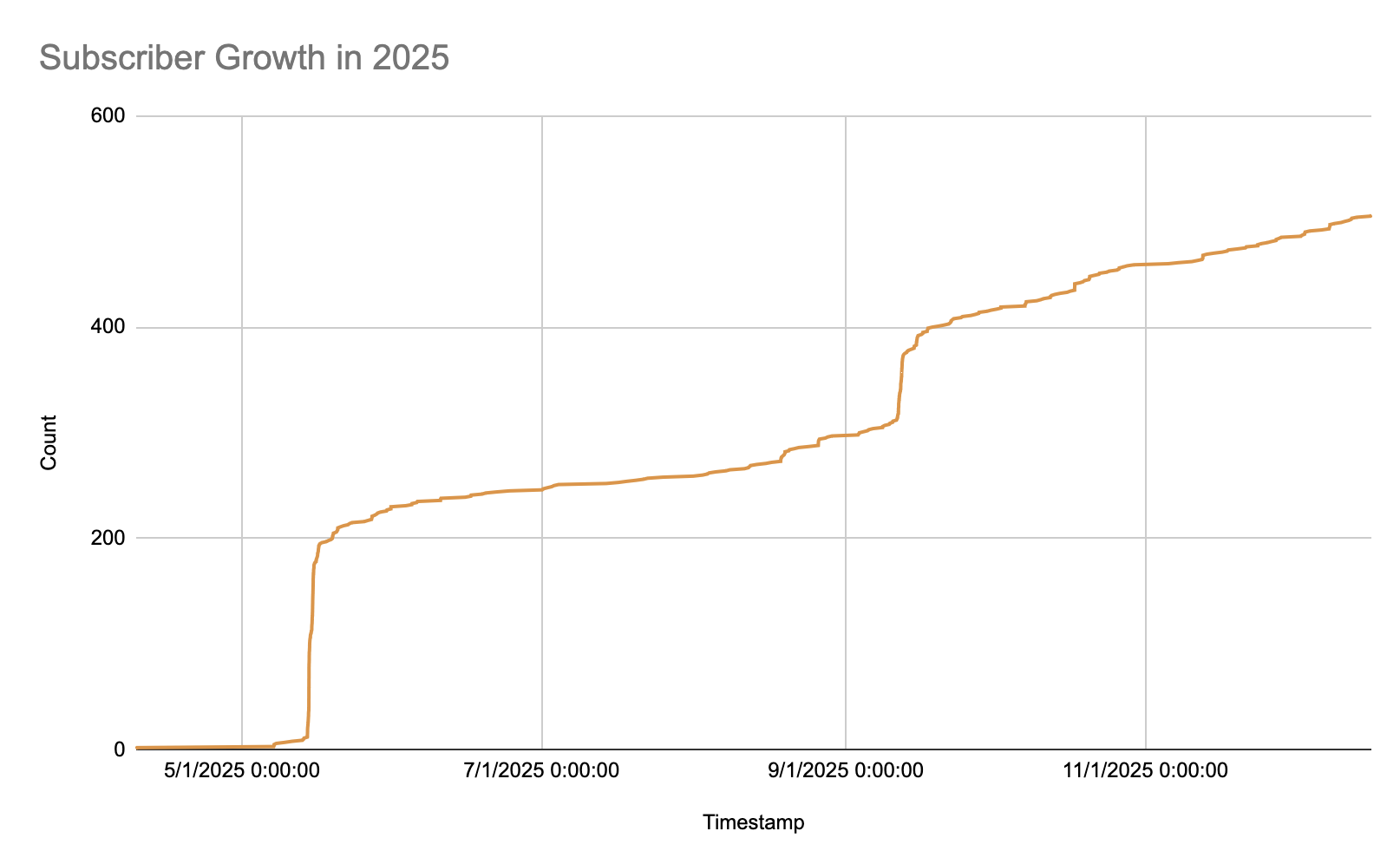
DHNow relaunched its first issue on May 21, 2025. There was a large spike that followed the announcement of the relaunch. Subscribers grew steadily over the summer during our soft launch, when newsletters were published every other week. There was a second spike at the start of the school year in September, when DHNow resumed weekly publication. We’re also happy to see consistent steady growth between both spikes.
New Staff
The new relaunched version of DHNow is being led by co-Directors Dan Cohen and Julia Flanders.
The positions of General Editor and Managing Editor/Site Manager have been combined into a single position of Project Manager, which is staffed by Colleen Nugent McLean.
New Roles
Our volunteer editorial positions are the key to DHNow’s success. As part of our 2025 relaunch, we planned two distinct editorial positions at DHNow: Editors-at-large and guest editors. Editors-at-large have continued to work in much the same way as before,, with volunteers signing up to review online content at their own pace and nominate selections when relevant. Our new guest editor program sought to bring more agency to the editorial position, with each guest editor responsible for selecting an Editors’ Choice once a month. Guest editors are recruited for four-month terms in spring, summer, and fall. We want to thank our initial Fall 2025 cohort of guest editors: Rachel Hogan, Augustine Fariola, Abirlal Mukherjee, and Lívia Clarete.
As the new iteration of DHNow comes into itself, we have considered how best to situate the selections within the field of DH. To address this, starting in January 2026, our guest editors will also provide brief editor’s notes to contextualize the Editors’ Choice posts, and indicate what is timely and distinctive about the piece.
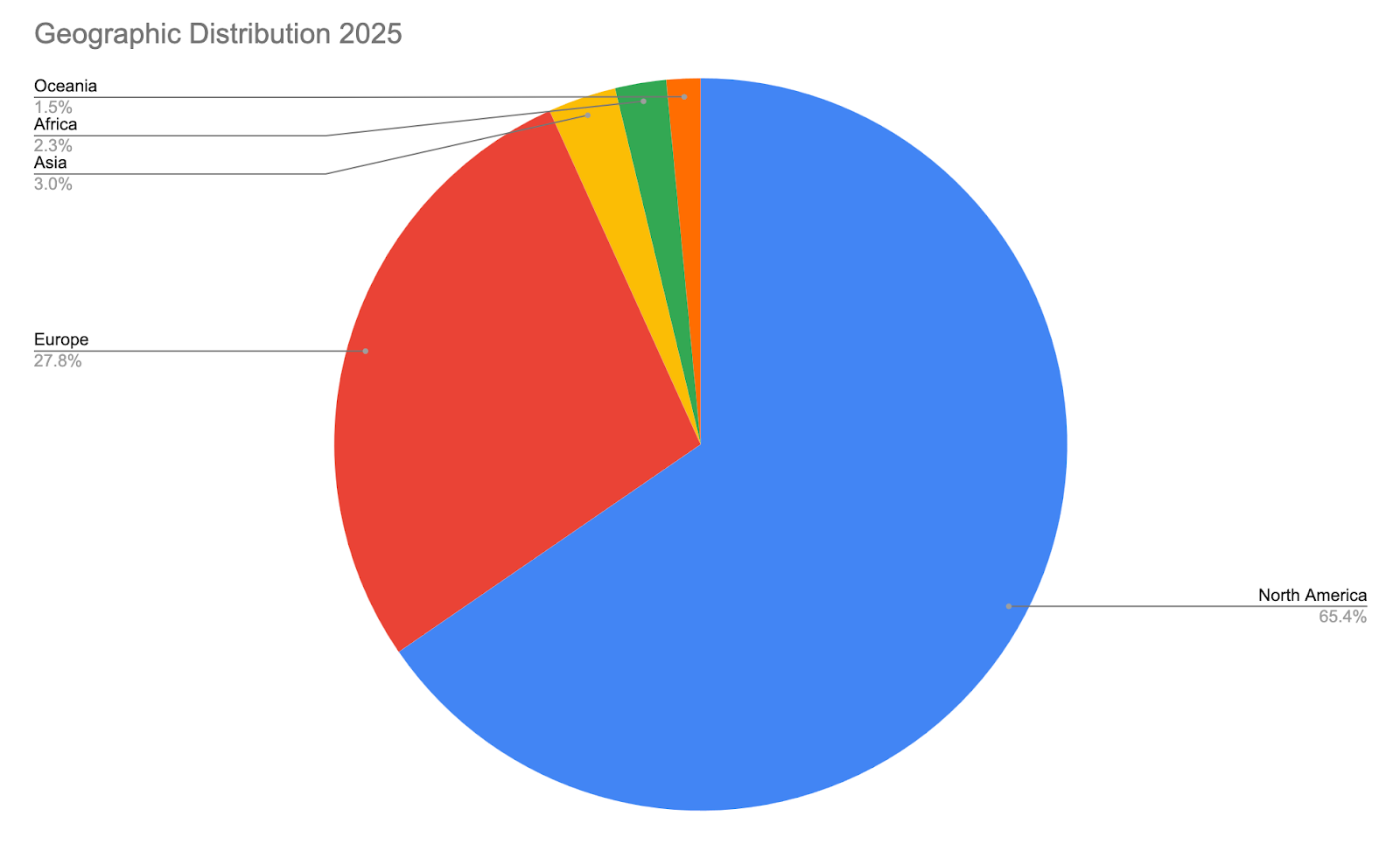
We have also been considering DHNow’s place in the global DH community. As can be seen in the chart below, our content has been dominated by works from North America and to a smaller extent Europe, with a smaller (but growing!) contingent from other parts of the world. To help expand the geographic scope of our feeds and sources, we are in the process of recruiting a Global Advisory Board. We hope to provide a more global picture of the DH landscape moving into the new year. If you know of feeds and sources from areas of the world that are currently underrepresented in DHNow, please nominate them!
New Content
DHNow can be a very useful resource in the digital humanities classroom. In this spirit, we have put together a collection of potential assignments using DHNow on our new Teaching with DHNow page. We hope to include teaching examples, so if you use DHNow in your classroom please contact us!
Join us again in 2026!
On behalf of the DHNow staff, thank you for another great year. We look forward to publishing more digital humanities news and scholarship in January 2026. Don’t forget to join us again in the new year by nominating feeds or sources with relevant digital humanities content and by volunteering to serve as a Guest editor or an Editor-at-Large.