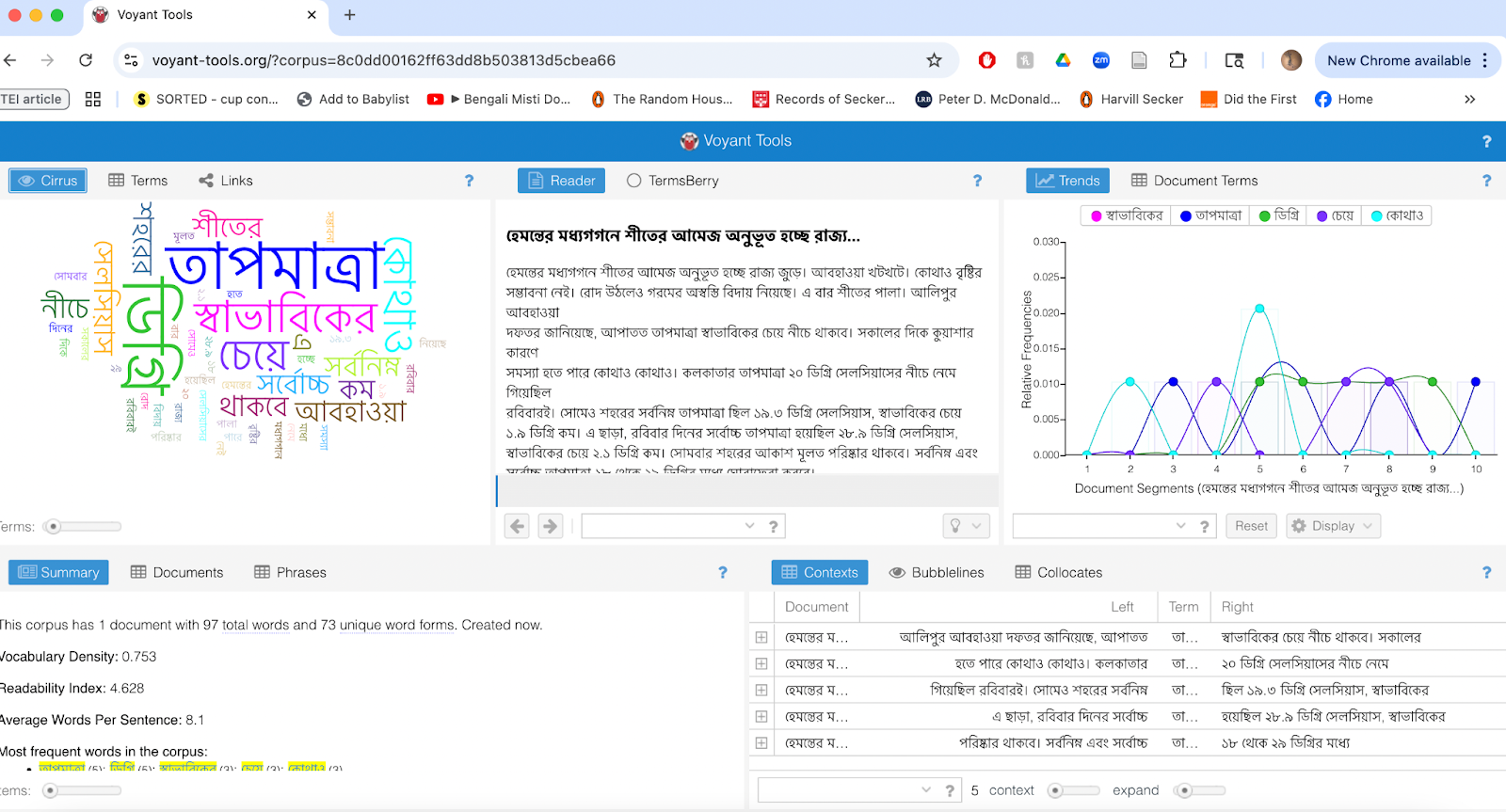



In designing an introductory Digital Humanities class, I am often faced with the question of how best to incorporate linguistic diversity, particularly from the Global South, for a predominantly Anglophone student body. How do I invite students to critically examine the Anglophone bias underlying much of DH theory and practice without necessarily depending on the languages they know and work within? Beyond reading key theoretical works by Roopika Risam, Kelly Baker Josephs, Rahul K. Gairola, and Sayan Bhattacharyya, how might students perform the task of digitally engaging with cultural records from the Global South? In what follows, I offer one method that I have successfully employed in my DH classes to create practical, hands-on assignments which introduce students to both the limitations and possibilities of DH tools in working with languages from the Global South. The discussion highlights my notes on teaching Omeka using Bengali language texts as the sample document for the class. My goal here is to also focus on publicly available software and texts so as to increase access for both students and instructors. As a caveat, I offer that this method is neither the only possible one, nor as an exhaustive introduction to these tools. This is simply the approach that has worked well for students who speak and live in English, and do not have a working knowledge of languages beyond that.
Editors’ Choice: Teaching Bengali Digital Texts to Anglophone Undergraduates: What Voyant Reveals about the Infrastructural Bias of DH Tools