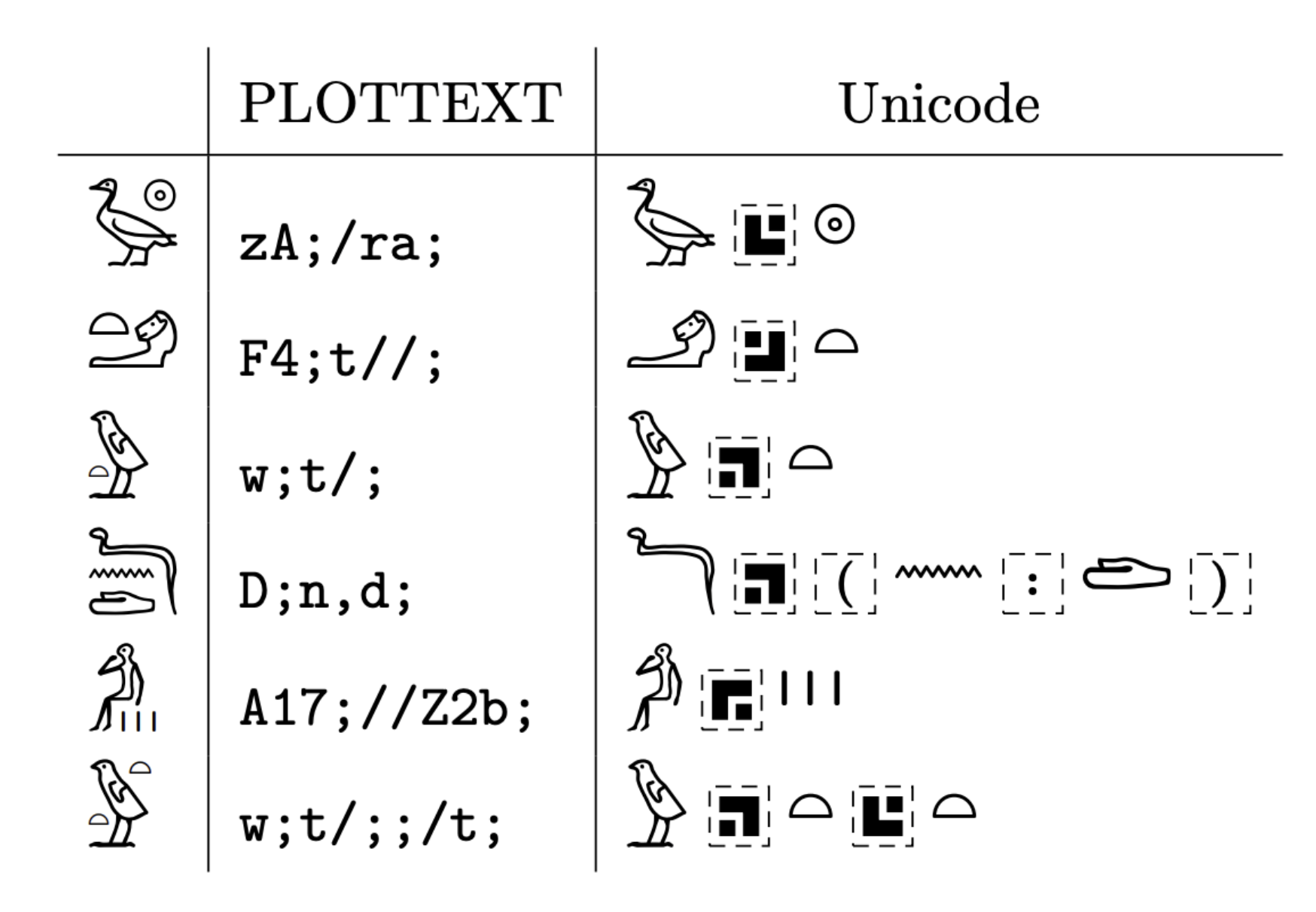
Our take: In “Composing and Inputting Ancient Egyptian Hieroglyphs with Unicode Control Characters,” published in The Digital Orientalist, So Miyagawa traces how Unicode has slowly learned to handle the two-dimensional layout of hieroglyphs. Basic signs entered the standard in 2009, but they could only appear in a flat line until control characters for stacking and joining signs within a quadrant were added from 2019 onward. Miyagawa explains that these invisible instructions only work when fonts and shaping engines support them, a gap filled by Andrew Glass’s open-source Egyptian OpenType. He also presents SINUHE HieroTyper Unicode, his browser tool for composing hieroglyphic text. The article offers a clear case study of the standards and infrastructure that make non-Latin scripts usable in digital scholarship.
Editors’ Choice: Composing and Inputting Ancient Egyptian Hieroglyphs with Unicode Control Characters: The Impact of Egyptian OpenType